



Employer-sponsored benefits are evolving rapidly, driven by AI, economic uncertainty, and rising healthcare costs. Discover key midyear trends shaping 2025 and strategies to keep your organization competitive. Download the full report for insights.
Read More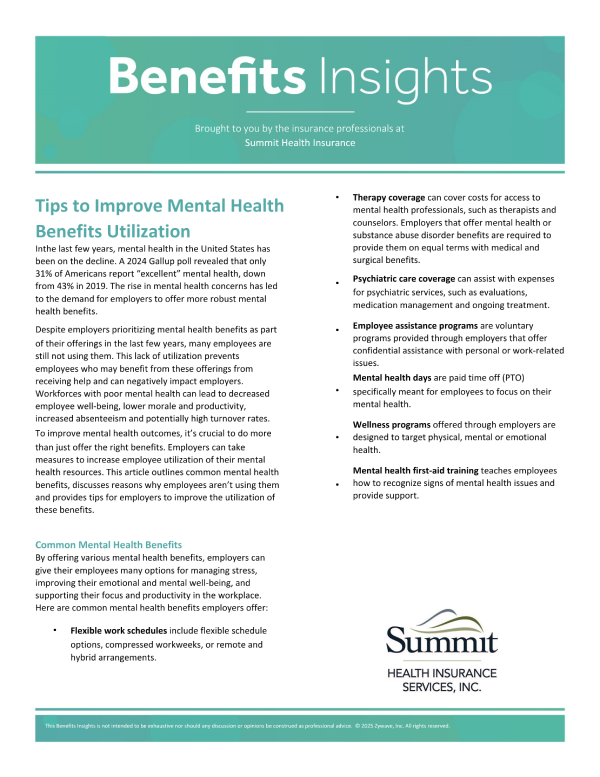
Employers are offering more mental health benefits, but many employees aren’t using them. This guide explores common barriers to utilization and provides actionable strategies to increase engagement, improve well-being, and support a mentally healthy workplace culture.
Read More
An HSA paired with a high deductible health plan offers flexibility, tax savings, and long-term benefits. This guide explains how HSAs work, their advantages, contribution limits, and eligible expenses to help you decide if this option is right for you.
Read More
For those with packed schedules, long days or a lack of routine, prioritizing sleep may feel daunting. Fortunately, focusing on your sleeping environment, habits and attitude can lead to improved sleep hygiene.
This article explains sleep hygiene and its importance and highlights seven tips for quality and restorative rest.
Read More
Employee leave requests increased for the third consecutive year in 2024, according to the 2025 State of Leave and Accommodations report from software firm AbsenceSoft.
As expected, the survey revealed that recovery from an illness or injury is the top reason for employees’ leave requests, with 57% of employers reporting these as a top three most common cause.
Read More
Employers obtain employees’ medical information for various reasons, such as verifying a reasonable accommodation request, certifying leave or confirming eligibility for disability benefits.
Read MoreAttracting and retaining employees has challenged employers since the onset of the COVID-19 pandemic. In 2024, the labor market is expected to cool slightly; however, competition for talent will remain. As such, employers must remain agile and adapt to developing labor and market trends that will shape the market in 2024. In particular, current labor challenges are forcing employers to find ways to balance rising health care costs and inflation while providing employees with benefits they value and need. Understanding this year’s key employee benefits trends can help employers attract and retain talented individuals in an evolving labor market.
This article discusses seven key employee benefits trends in 2024.
Read MoreAmid ongoing inflation pressures, employees and employers alike can expect their health care costs to increase in 2024. Global professional services firm Aon reported that health care costs for employers will grow by 8.5% in 2024 (to more than $15,000 per employee), nearly double 2023’s figure. In line with those findings, the Business Group on Health’s 2024 Large Employer Health Care Strategy Survey predicts a 6% increase in health care costs in 2024.
Read More
Employers continue to struggle with rising health care costs and providing employees with affordable and quality care options. Unfortunately, employers expect health care costs to increase significantly in 2024, according to several industry surveys and reports. This article provides guidance to help employers discuss increasing health care costs with their workers and aid employees in mitigating these expenses.
Read More
Employers are increasingly looking to consumer driven health plans to help soften the blow of continually rising health care costs. Depending on the model, consumer driven health plans typically include health savings accounts, health reimbursement arrangements and flexible spending accounts. This infographic provides a quick and easy comparison of tax-advantaged health care accounts.
Read More